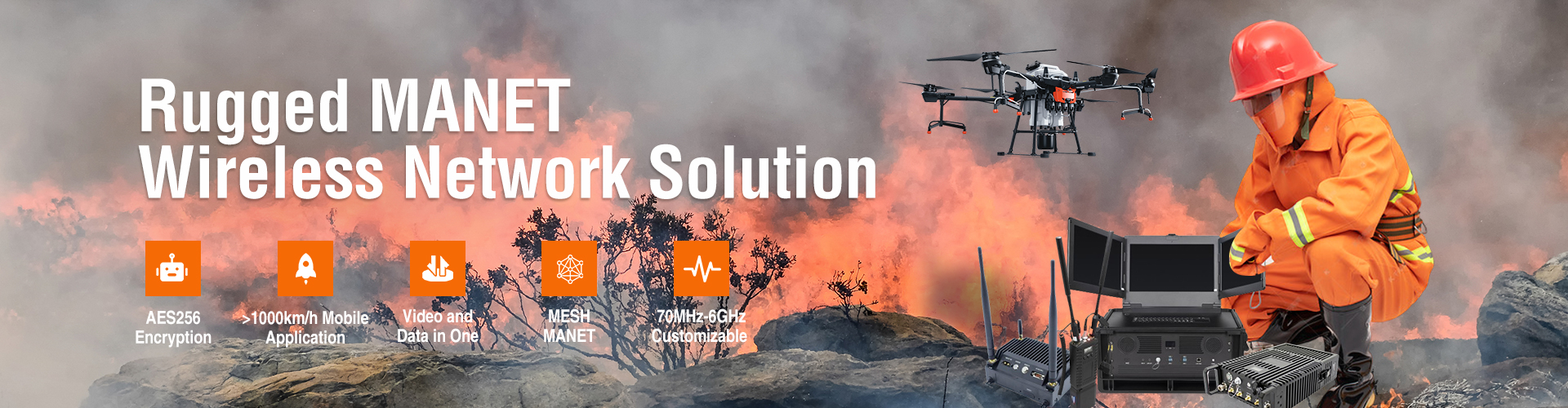
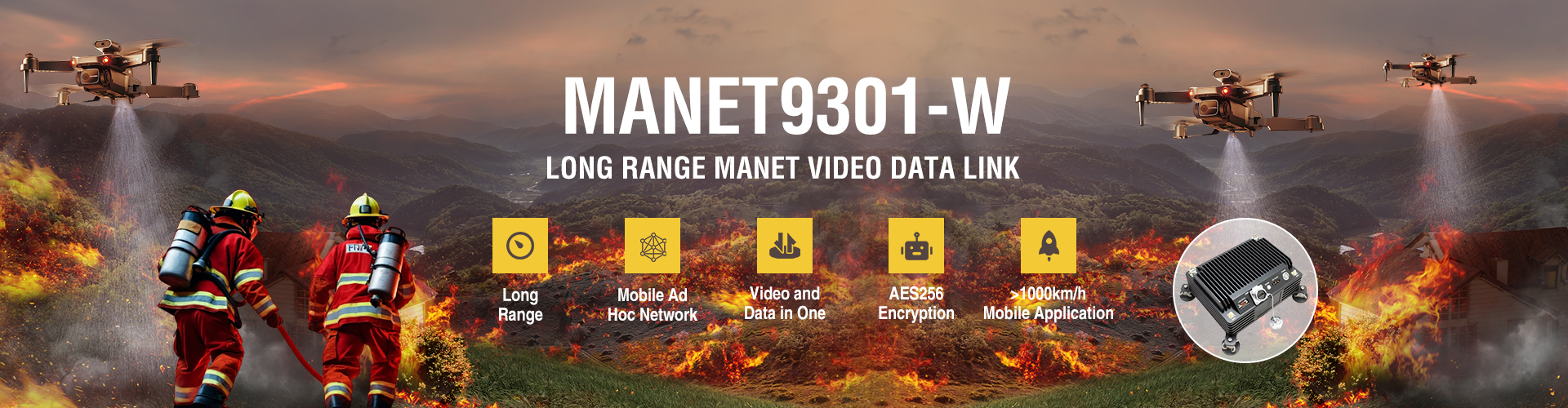
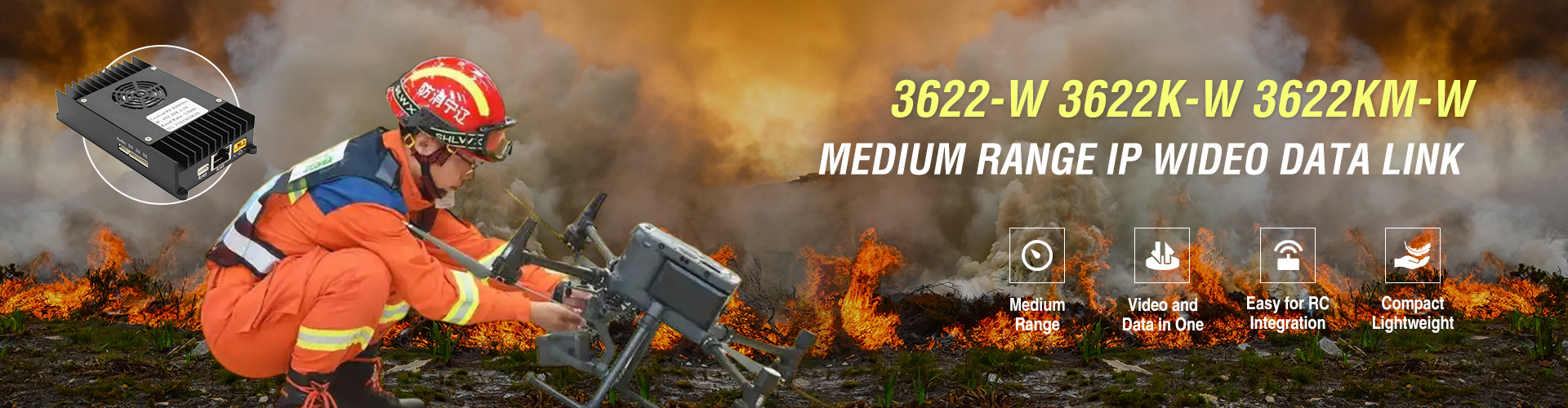
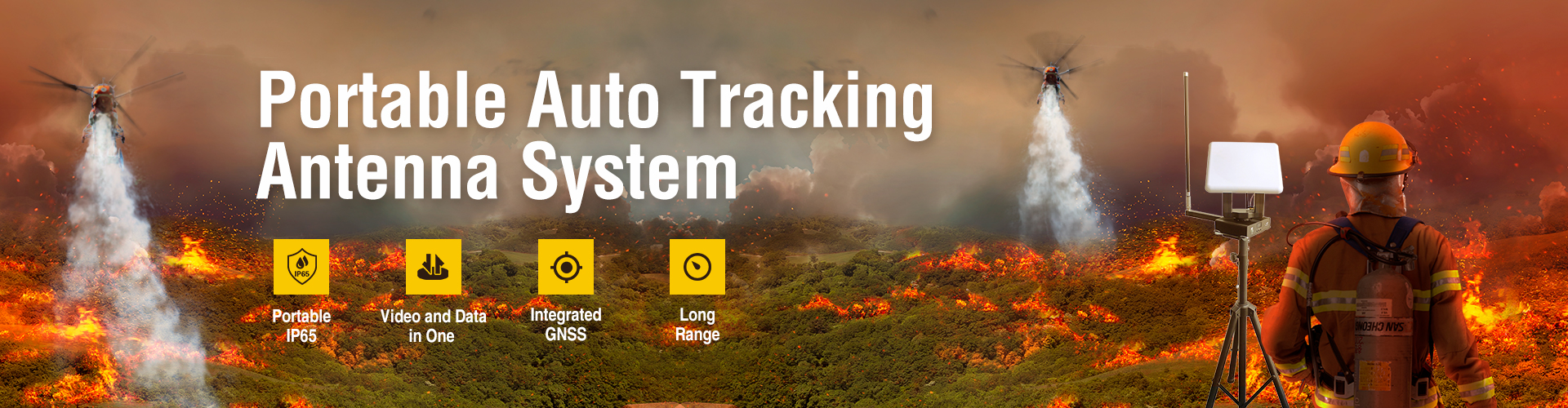
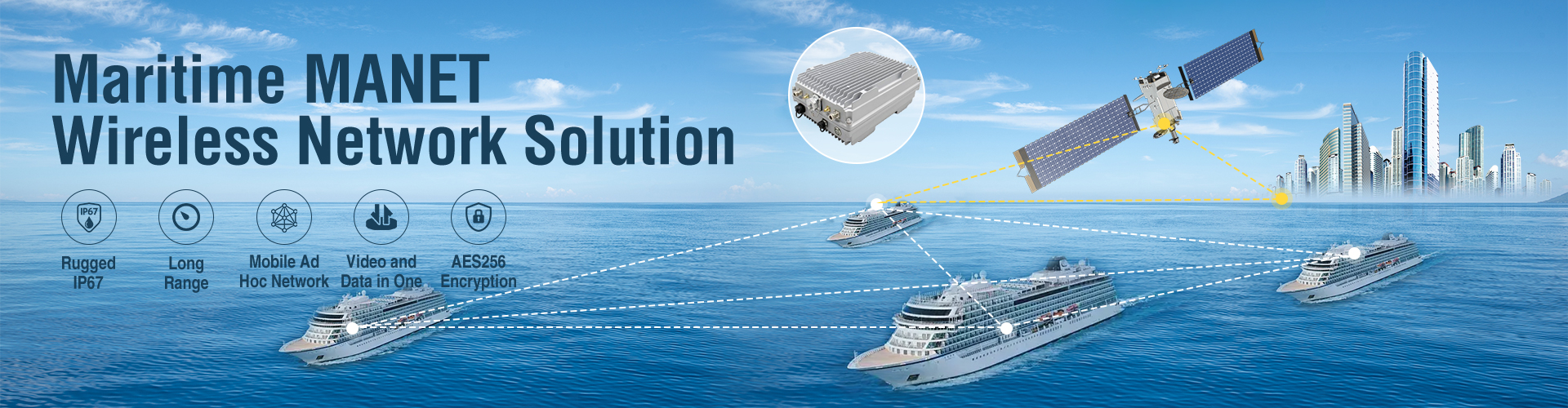
MANET (Mobile Ad Hoc Network) is a new type of broadband wireless mesh network based on Ad Hoc networking technology.
As a mobile self-organizing network, MANET does not rely on existing network infrastructure and supports arbitrary network topologies.
Unlike traditional centralized wireless networks (base-station dependent systems), MANET is a decentralized communication network designed with a distributed mesh architecture. It is characterized by:
No central node
Distributed wireless broadband communication
Multi-hop relay transmission
Dynamic routing
Strong survivability
Excellent scalability
The network supports arbitrary topology structures. Through dedicated routing protocols, data communication and service interaction are achieved between network nodes via multi-hop wireless forwarding through neighboring nodes.
MANET offers:
Low deployment and maintenance cost
Large coverage area
High data rate
Strong network robustness
High adaptability
Self-aware and self-healing links
MANET can operate as an independent wireless self-organizing network or serve as an effective supplement and extension to existing heterogeneous network systems.
MANET is widely used in:
Emergency communication private networks
Industry information private networks
Regional broadband private networks
Wireless monitoring private networks
Collaborative management networks
Intelligent transmission private networks
OFDM (Orthogonal Frequency Division Multiplexing) is a widely used modulation technology in modern communication systems.
Its core principle is to divide a wideband channel into multiple orthogonal subcarriers. High-speed data streams are converted from serial to parallel and transmitted over these subcarriers.
COFDM (Coded OFDM) integrates channel coding with OFDM technology to significantly improve performance in multipath and interference environments.
Strong resistance to frequency-selective fading
Effective suppression of narrowband interference
High spectral efficiency
Orthogonal subcarriers eliminate mutual interference
Adaptive modulation per subcarrier based on channel conditions
By jointly encoding subcarriers, the system achieves strong anti-fading capability.
When multipath fading occurs and only subcarriers within a frequency notch are affected, other subcarriers remain unaffected. Channel coding provides error correction capability, ensuring reliable high-speed data transmission.
COFDM is especially suitable for:
Multipath environments
Fading channels
High-speed wireless transmission scenarios
MIMO technology uses multiple transmitting antennas and multiple receiving antennas to create multiple transmission channels between transmitter and receiver.
Signals are transmitted and received through multiple antennas, forming parallel communication channels.
MIMO provides:
Transmits multiple independent copies of the same signal
Reduces probability of deep fading
Improves transmission reliability and robustness
Treats the wireless channel as multiple parallel subchannels
Transmits different data streams simultaneously
Significantly increases channel capacity
Theoretically, MIMO channel capacity increases linearly with the number of antennas.
MIMO simultaneously improves:
Reliability (via diversity)
Throughput (via multiplexing)
There is a tradeoff between diversity gain and multiplexing gain. Proper optimization maximizes overall system performance at the cost of increased processing complexity.
MIMO is a core technology widely adopted in modern wireless communication systems.
Smart frequency selection is an emerging anti-interference technology that improves transmission reliability and stability by avoiding interference.
It consists of three key stages:
Real-time monitoring of frequency interference and background noise during normal communication.
Provides data foundation for decision-making.
Each node independently selects the optimal frequency based on receiving performance optimization.
The decision is autonomous and distributed.
After selecting a new optimal frequency, the system switches frequency without data loss.
Ensures stable and continuous transmission.
Nodes dynamically select optimal frequencies
Supports heterogeneous frequency networking
Improves overall network performance
Effectively avoids interference
Frequency hopping is a commonly used anti-interference and anti-interception communication technology.
Communication parties switch frequencies according to a pre-defined pseudo-random hopping sequence.
To ensure proper communication:
Hopping pattern synchronization must be achieved first
Transmitter and receiver switch to the same frequency at the same time
Burst data transmission occurs at each hop
Frequency diversity
Strong anti-jamming capability
Improved link quality
Even if some frequencies are interfered with, communication continues over unaffected frequencies.
Compared with fixed-frequency communication:
Frequency hopping is more covert
Harder to intercept
Difficult to decode without knowing hopping pattern and cycle
Wireless signal strength decreases as transmission distance increases.
When two nodes are sufficiently far apart, their transmissions do not interfere.
Spatial Time Division Multiplexing (STDM) leverages:
Global topology awareness
Spatial isolation between nodes
Sufficient safe transmission distance
It allows multiple nodes to transmit simultaneously if they are spatially separated and non-interfering.
Traditional Time Division Multiplexing (TDM):
Transmission bandwidth decreases with hop count
STDM:
Enables simultaneous transmission over spatially separated links
Improves network throughput
Reduces bandwidth consumption caused by multi-hop forwarding
STDM:
Uses global topology information
Dynamically allocates time resources
Minimizes resource consumption
Maximizes network throughput
Carrier Aggregation combines multiple carriers to form wider transmission bandwidth.
It can aggregate:
Continuous frequency blocks
Non-contiguous frequency fragments
Different frequency bands
Intra-band contiguous aggregation
Same band
Adjacent spectrum
Intra-band non-contiguous aggregation
Same band
Spectrum separated by gaps
Inter-band aggregation
Different frequency bands
Increases transmission capacity
Improves spectral efficiency
Enhances system compatibility
Better adapts to fragmented frequency resources
Beamforming is a signal enhancement technology used in multi-antenna systems.
By adjusting:
Phase
Amplitude
of each transmitting antenna, signals constructively combine at the receiver direction.
Improves received SNR
Enhances signal quality
Reduces fading impact
Forms directional narrow beams instead of omnidirectional radiation
The same principle applies to the receiving end:
Adjust phase and amplitude
Increase system gain
Due to mobility and scattering environments:
Channel parameters must be estimated
Feedback must be obtained
Beam direction must be dynamically adjusted
Adaptive beamforming:
Forms optimal beam direction
Suppresses interference from other directions
Maximizes system capacity
Interference defense integrates multiple anti-interference technologies.
Maintain stable network connectivity and service transmission even under strong interference environments.
Example:
Transmission interruption probability up to 50%
Network remains stable
Data transmission remains continuous
Combines with frequency hopping
Compatible with multiple communication modes
Enhances system robustness
Improves anti-interference capability